The Parasocial Economy: How Creators Monetize Emotional Proximity
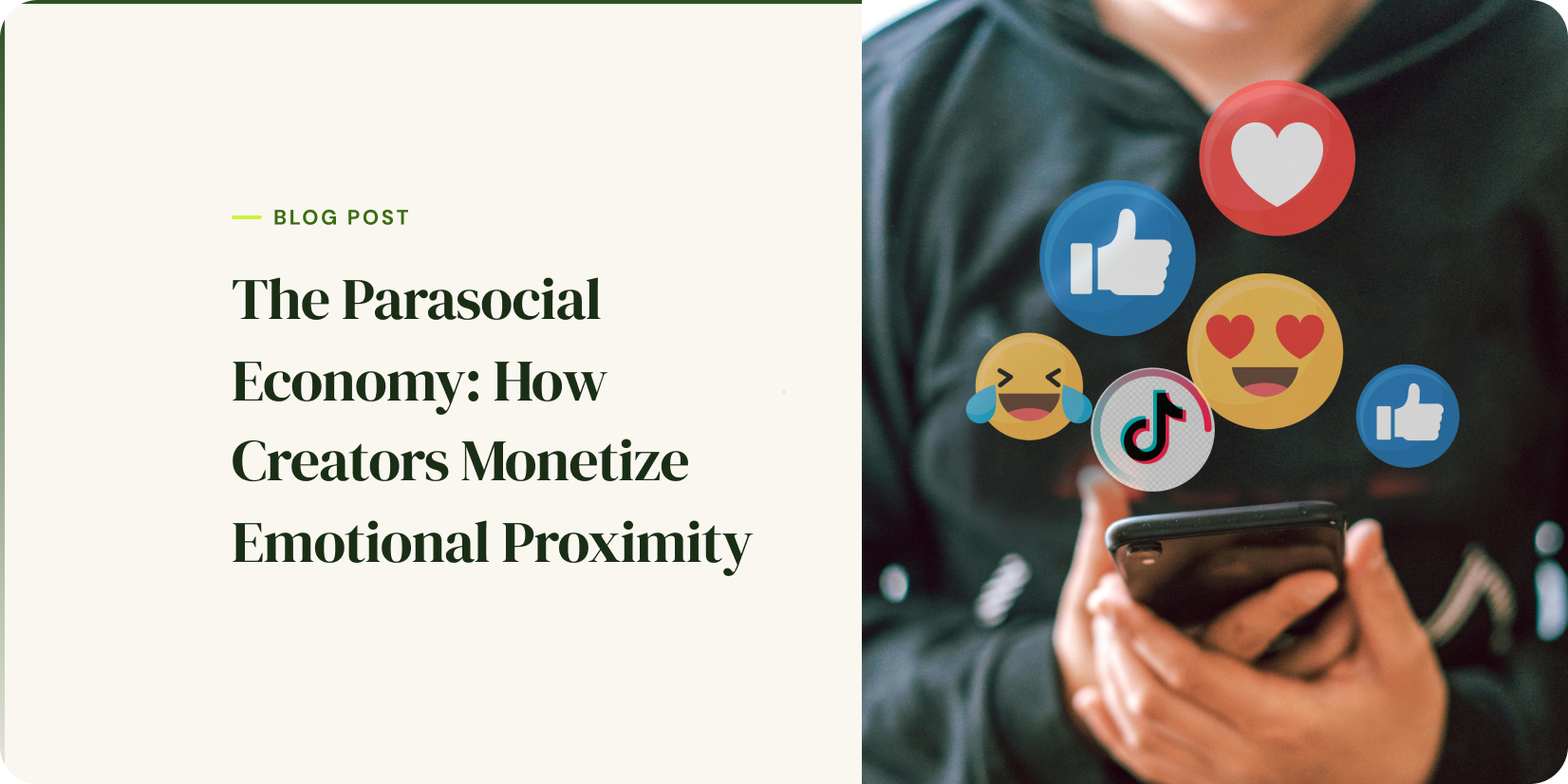
A fan watches a creator's vlog every Sunday morning for three years. They know the creator's coffee order, the names of their pets, and the exact layout of their living room. When the creator goes through a breakup, the fan feels genuine sadness. When the creator launches a coffee company, the fan buys a bag immediately.
The creator, meanwhile, has absolutely no idea who the fan is.
This is a parasocial relationship: a one-sided psychological bond where the audience feels an intimate connection to a media figure. In traditional Hollywood, this bond was managed by publicists and kept at a distance. In the creator economy, this bond is the entire business model.
Here is the financial reality of emotional proximity, why it drives the highest conversion rates on the internet, and the danger of building a business on the feeling of friendship.
The Economics of Intimacy
If you look at the raw data, the creator economy makes no sense.
Why would someone pay $65 for a generic blank hoodie with a small embroidered logo, when they could buy a higher-quality hoodie from a dedicated apparel brand for $40? Why would someone pay $5 a month to access a creator's Discord server when there are thousands of free communities online?
The answer is emotional proximity. The transaction is not about the product. The transaction is a mechanism for the fan to participate in the creator's life.
When a fan buys the hoodie, they are not buying cotton; they are buying a tangible piece of the parasocial relationship. They are buying the feeling of supporting a friend. This is why creators with deep parasocial bonds have conversion rates that dwarf traditional e-commerce brands. A traditional brand has to convince a customer that the product is good. A creator just has to convince the customer that the creator is good.
The Scale of the Bond
The depth of a parasocial relationship is directly tied to the format of the content.
A creator who produces highly polished, heavily scripted video essays will build massive authority and respect, but a relatively weak parasocial bond. The audience admires their intellect, but does not feel like they know them.
A creator who produces unedited daily vlogs, livestreams for six hours on Twitch, or hosts an unscripted conversational podcast will build a massive parasocial bond. The audience spends hundreds of hours listening to their unfiltered thoughts.
The financial implication is clear: authority scales AdSense and sponsorships. Intimacy scales direct commerce (merchandise, Patreon, paid communities).
The Danger of the Illusion
Monetizing emotional proximity is highly profitable, but it is also incredibly fragile.
The business model relies on the audience believing the relationship is authentic. When a creator shatters that illusion—by taking a predatory sponsorship, hiding a massive lifestyle change, or treating the audience with contempt—the backlash is not just a loss of viewership. It is a parasocial breakup.
When fans feel betrayed by a "friend," the financial collapse is immediate. Patreon subscriptions vanish. Merchandise sales flatline. The business burns down faster than a traditional company ever could.
Protecting the Core Asset
Because the parasocial bond is your primary asset, you must protect the environment where it thrives.
If a creator needs to hire a team to increase production quality, or wants to launch a new physical product line to serve their community, they cannot risk taking on toxic sponsorships to fund it. They must use clean capital.
This is where CreatorFi's AdSense advance model becomes a strategic advantage. By pulling forward the predictable revenue from their existing catalog, a creator can fund their next community project or merchandise drop without compromising the trust of the audience. You protect the bond, and the bond protects the business.
The Responsibility of Influence
You are not just selling products. You are managing human emotions at scale.
Cultivate the relationship ethically. Deliver genuine value. Never forget that on the other side of the screen, someone thinks of you as a friend.

Frequently Asked Questions
What is a parasocial relationship in the creator economy?
A parasocial relationship is a one-sided psychological bond where a fan feels a deep, personal connection to a creator, while the creator does not know the fan exists. This bond is formed through hundreds of hours of watching or listening to the creator's content.
Why do creators have higher e-commerce conversion rates than traditional brands?
Creators have higher conversion rates because the transaction is driven by emotional proximity rather than pure product utility. Fans buy a creator's merchandise or subscribe to their Patreon as a way to participate in the creator's life and support someone they view as a friend.
Does the format of a creator's content affect their parasocial bond?
Yes. Unscripted, high-frequency, and long-form content (like daily vlogs, Twitch livestreams, and conversational podcasts) builds deep parasocial bonds. Highly scripted, polished, and infrequent content (like video essays) builds authority and respect, but lower intimacy.
What happens when a creator breaks the parasocial bond with their audience?
When a creator breaks the illusion of authenticity—such as by taking a predatory sponsorship or lying to their audience—the fans experience it as a personal betrayal. This leads to an immediate and severe collapse in direct revenue streams like Patreon and merchandise.
How can creators fund their business without risking their audience's trust?
Creators should avoid taking low-quality, high-paying sponsorships that damage audience trust. Instead, they can use specialized financing like an AdSense advance from CreatorFi to fund new projects or merchandise drops, using their own future revenue to protect their current credibility.