In 2018, a creator could film a vlog on their iPhone, edit it in iMovie in two hours, and generate a million views. The profit margin on that video was close to 99%.
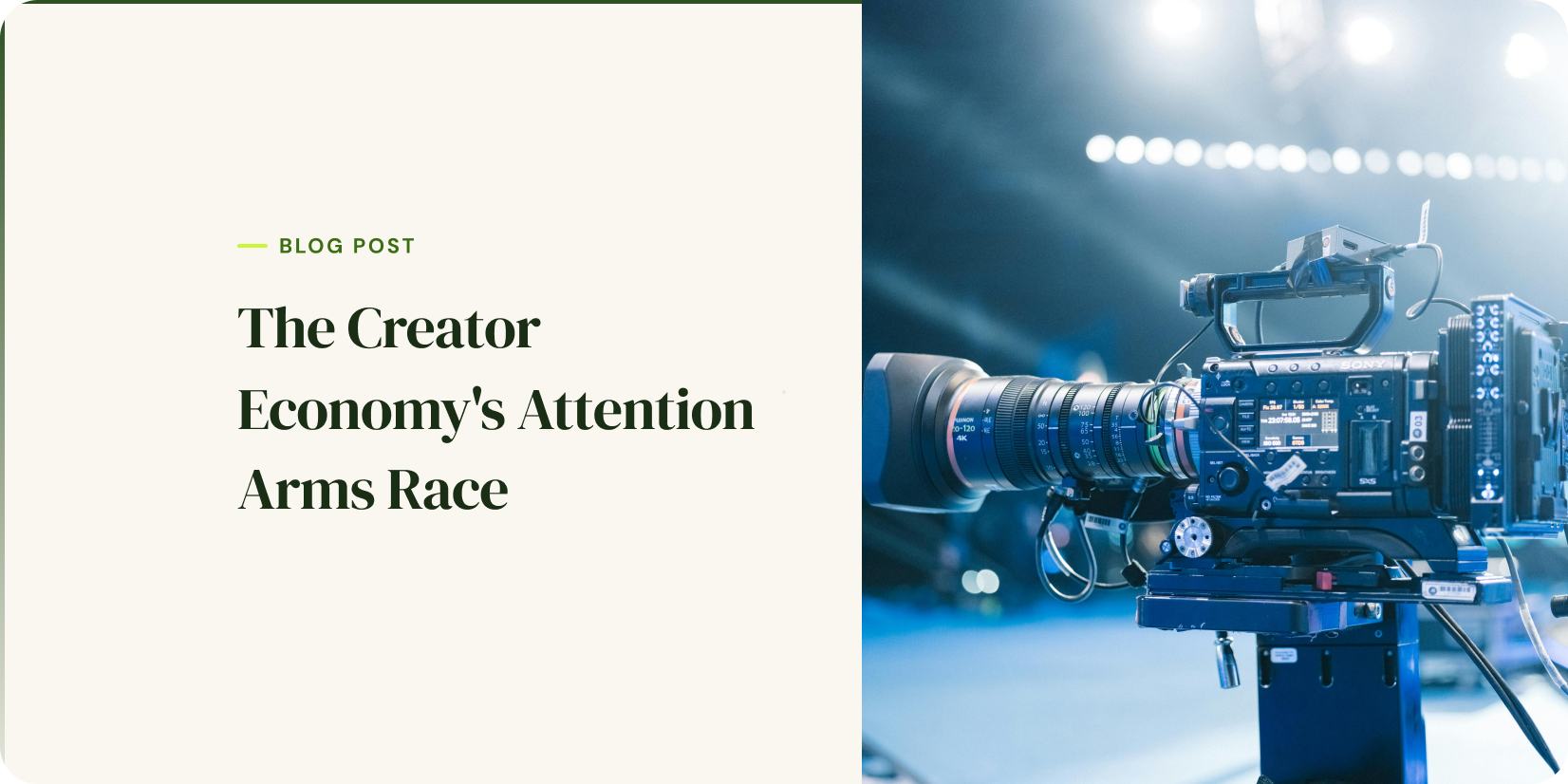
Today, that same million-view video often requires a $5,000 cinema camera, a three-person editing team, custom 3D motion graphics, and a $10,000 set build. The video still makes the same amount of AdSense revenue, but the profit margin has collapsed.
Welcome to the creator economy's attention arms race. Driven by the "MrBeastification" of YouTube and an influx of traditional media capital, the cost of competing for audience attention has skyrocketed. Here is how production inflation is squeezing creator margins, and the financial strategies required to survive it.
The "MrBeast Effect" and Production Inflation
The arms race was largely triggered by Jimmy Donaldson (MrBeast). By reinvesting every dollar of revenue back into his videos—escalating from $10,000 giveaways to multi-million-dollar, Netflix-scale productions—he fundamentally changed viewer expectations.
When the biggest creator on the platform conditions the audience to expect cinematic pacing, flawless color grading, and massive set pieces, the algorithm adapts. Videos with lower production value see their Average View Duration (AVD) drop. When AVD drops, the algorithm stops recommending the video.
To maintain their reach, mid-tier creators are forced to upgrade. They hire specialized thumbnail designers, sound engineers, and retention editors. The result is massive production inflation: the baseline cost to produce a competitive YouTube video has increased by an estimated 300% to 500% over the last five years.
The Margin Squeeze
This production inflation creates a dangerous financial dynamic: the margin squeeze.
While the cost to produce a video has skyrocketed, YouTube AdSense CPMs have remained relatively flat. If a creator spends $5,000 to make a video that earns $6,000 in AdSense, their gross margin is just 16%. Once you factor in taxes and overhead, the video might actually lose money.
Many creators with millions of subscribers are quietly operating at a loss, funding their escalating video budgets with personal savings or high-interest debt just to keep up with the algorithm.
The Two Survival Strategies
To survive the attention arms race, creators must choose one of two distinct financial strategies. You cannot sit in the middle.
Strategy 1: The Authenticity Pivot (Low Cost, High Trust)The first option is to completely opt out of the arms race. Instead of competing on cinematic quality, the creator competes on raw authenticity. This is the "Emma Chamberlain model"—deliberately lo-fi editing, iPhone footage, and hyper-personal storytelling. By keeping production costs near zero, the creator maintains a 90%+ profit margin. The tradeoff is that growth is often slower, and the creator must possess extraordinary natural charisma to hold attention without flashy editing.
Strategy 2: The Enterprise Pivot (High Cost, High Return)The second option is to lean into the arms race, but restructure the business model to support it. If a video costs $20,000 to make, the creator cannot rely on AdSense. They must treat the high-end video as a loss leader for a much larger commercial ecosystem.
In this model, the cinematic video is designed to secure premium, six-figure brand integrations, or to act as a marketing funnel for the creator's own high-margin consumer products (like MrBeast's Feastables or Logan Paul's Prime).
Financing the Enterprise Pivot
If a creator chooses the Enterprise Pivot, they face a massive cash flow problem. They need to spend $20,000 to make the video today, but the brand deal might not pay out on Net-60 terms, meaning the cash won't arrive for three months.
This is where the traditional banking system fails creators, and where specialized financing becomes mandatory.
Instead of putting production costs on a credit card, creators use platforms like CreatorFi to secure an advance on their channel's future AdSense revenue. This provides the clean, upfront capital needed to hire the editing team, build the set, and compete in the arms race without taking on personal financial risk.
The New Baseline
The era of the zero-dollar viral video is largely over. The creator economy is now a capital-intensive media industry. If you want to play the game, you have to know how to finance it.

Frequently Asked Questions
What is the "MrBeast Effect" on YouTube?
The "MrBeast Effect" refers to the massive inflation in production quality across YouTube, driven by Jimmy Donaldson's strategy of reinvesting millions of dollars into his videos. This conditioned audiences to expect cinematic pacing and high production value, forcing other creators to upgrade their content to remain competitive.
Why are creator profit margins shrinking?
Creator profit margins are shrinking because the cost to produce a competitive video (cameras, editors, set builds) has skyrocketed, while YouTube AdSense CPMs have remained relatively flat. Creators are spending significantly more money to generate the same amount of revenue.
How can creators survive the rising cost of production?
Creators typically choose one of two paths: The Authenticity Pivot (deliberately lowering production costs and relying on raw personality to maintain high margins) or the Enterprise Pivot (spending heavily on production but using the videos as loss leaders to sell high-margin consumer products or secure premium brand deals).
Why is cash flow a problem for high-end creators?
High-end videos require upfront cash to pay editors, crew, and production costs. However, the primary revenue sources for these videos (brand deals and AdSense) often do not pay out until 30 to 60 days after the video is published, creating a dangerous gap in cash flow.
How do creators finance expensive video productions?
Instead of using high-interest credit cards, professional creators use specialized financing tools like a CreatorFi AdSense advance. This allows them to leverage their channel's predictable future ad revenue to get the upfront cash needed to fund high-end productions and compete in the attention arms race.